
Placenta, Exosome and Nanoparticle Laboratory
About the Lab
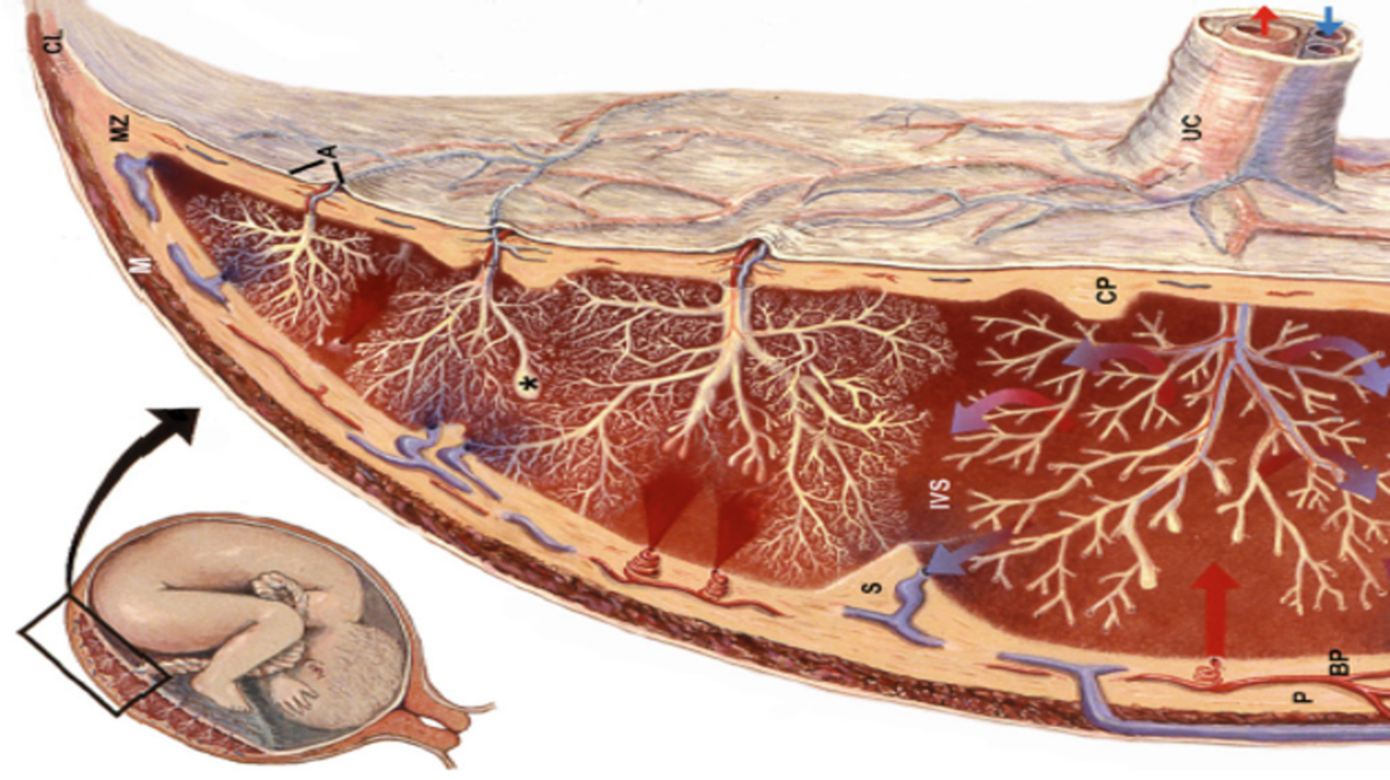
The placenta, a vital organ shared by the mother and fetus, plays a central role in maternal-fetal gas exchange, transfer of nutrients and waste, hormone production and immunological defense. The placenta also communicates signals that are essential for pregnancy health. The outer layer of the placenta comprises specialized cells called syncytiotrophoblasts. These multinucleated cells are in direct contact with maternal blood and are the key to making the placenta work properly throughout pregnancy.
In addition to hormones, growth factors and other signaling proteins released into the maternal circulation, the syncytiotrophoblast layer also produces a wide array of lipid-encapsulated extracellular vesicles (EVs), including apoptotic cell-derived EVs, microvesicles and nano-sized EVs, commonly referred to as Exosomes.
The Ouyang Laboratory studies the biology of the human placenta and cellular and molecular mechanisms that govern placental communication at the maternal-fetal interface.
-
Lab Focus Areas
Developing Brain Institute
Intellectual and Developmental Disabilities
-
Partnerships
Institute for Biomedical Sciences (IBS) Program
George Washington University School of Medicine and Health Sciences
-
Contact
Yingshi Ouyang, PhD Principal Investigator youyang@childrensnational.org
Funding Highlight
-
Multimodal Analysis of Gestational Health and Placental Injury in Opioid-Affected; R01DA059176
This award centers on the adverse impact of illicit opioid use during pregnancy and its devastating consequences on the mother, fetus and the placenta. By integrating multimodal technologies and assessments, including single-cell RNA transcriptomics, spatial transcriptomics and chip-cytometric methods and analysis of placental extracellular vesicle, we will shed new light on mechanisms underlying opioid-dependent placental dysfunction and diseases during pregnancy and infancy.
Featured Publications
-
The Chromosome 19 miRNA cluster guards trophoblasts against overacting innate immunity
Mouillet JF, Ouyang Y, Sadovsky E, Kothandan VK, Sorenson HL, Badeau LJ, Sarkar SN, Chu T, Sorkin A, Sadovsky Y. PMID: 41168437 Commun. Biol. 8:1511 2025, Oct 30 -
A multi-platform assessment of extracellular vesicles from the plasma and urine of women with preeclampsia
Kothandan VK, Ouyang Y, Sadovsky E, Komsky-Elbaz A, Powell JS, Xia J, Huang TJ, Sadovsky Y. PMID: 39746834 Placenta 166:96-102 2025, June 13 -
The impact of opioids on the transcriptional landscape of human villous trophoblasts
Sadovsky E, Chu T, Barak O, Sadovsky Y, Ouyang Y. PMID: 37832183 Placenta 143:54-61 2023, Nov -
Term human placental trophoblasts express SARS-CoV-2 entry factors ACE2, TMPRSS2 and furin
Ouyang Y*, Bagalkot T, Fitzgerald W, Sadovsky E, Chu T, Martínez-Marchal A, Brieño-Enríquez M, Su EJ, Margolis L, Sorkin A, Sadovsky Y. PMID: 33853873 mSphere 6:e00250-21 2021 April 14 -
Placental small extracellular vesicles: Current questions and investigative opportunities
Sadovsky Y, Ouyang Y, Powell JS, Li H, Mouillet JF, Morelli AE, Sorkin A, Margolis L. PMID: 33218576 Placenta 102:34-38 2020 Dec
Related News
-
.png?rev=45399f6575bd48bc83382dcfcf450401)
Exploring placental frontiers to protect mothers and babies
February 24, 2026